Reliability·n8n workflow
Cloud Incident Postmortem Scaffold
On cloud incident: auto-generate postmortem structure (timeline, root cause, lessons learned, action items); save to doc store and notify team.
Overview
What it does: Webhook (incident report: incident_id, start_time, end_time, affected_services) → extract incident metadata → query cloud logs for event timeline (when did service degrade, first alert, detection, recovery) → LLM generates postmortem structure (summary, timeline, root cause hypothesis, lessons learned, 3-5 action items) → save to Google Drive/Notion → Slack to #incident-postmortems with link.
Setup (4 steps)
01
Configure incident webhook: POST incident details (timestamp, affected services, severity)
02
Connect doc storage: Google Drive, Notion, or Confluence (credentials)
03
Configure Slack channel: #incident-postmortems
04
Test: trigger with sample incident; verify document generated
Apps/nodes: Webhook, code node (metadata extraction), HTTP request (cloud logs API), Claude/OpenAI (postmortem), HTTP request (doc upload), Slack.
Credentials required: Cloud API, doc storage credentials, OpenAI account, Slack workspace.
Difficulty: High | Setup time: 12 minutes.
Business outcome: Incident learning captured immediately → postmortems ↑ thorough, blameless culture ↑, repeated incidents ↓ prevented.
What's included
Importable n8n workflow (JSON)
Workflow nodes and configuration — inspect triggers, logic, and actions
Setup notes: which credentials to connect
Free updates when the workflow changes
Commercial-use license — keep and customize
Email support if you get stuck
Inside this workflow
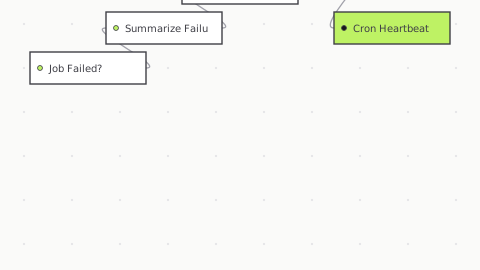
6 steps · 5 unique directed pathsFocus a node to inspect it
Quickstart
- 01
Download the JSON
With an active subscription, download the workflow file right from this page or your dashboard.
- 02
Import into n8n
Choose Import from File and select the downloaded JSON. The full agent graph appears, ready to configure.
- 03
Plug in credentials
Each integration node prompts for credentials on first run. The setup guide lists every credential the agent expects.
- 04
Activate and test
Run once with sample input, confirm the expected output, then flip the activate toggle.
Frequently Asked Questions
How do I import this workflow into n8n?
What credentials do I need to provide?
Are the credentials included in the JSON file?
Can I edit or customize the workflow after importing?
What n8n version is required?
What if something breaks after I import it?
Can I use this workflow for my customers or business?
Will the workflow receive updates?
Do I need n8n Pro or a paid plan?
Can I ask for a custom workflow?
Reviews (0)
No reviews yet. Be the first.
Sign in to leave a review.
Subscription
Included with subscription
This agent — and every other in the collection — comes with your subscription. One plan, the whole catalog.
Subscribe to download- Full collection access — every agent
- All new workflows as released
- Unlimited downloads
- Commercial-use license
- Priority support (Team plan)
- Cancel anytime